
Printed Shirt RFQs: Define the Button-Front Layout
For a printed button-front shirt, request a front-layout proposal that identifies the placket, visible buttons and pattern placement on the quoted garment. Review the proposed shirt with its front closed and keep the approved view with the order. Kujing’s 20128 catalogue photo is a useful appearance reference, but the supplier must confirm the offered layout and any customization.
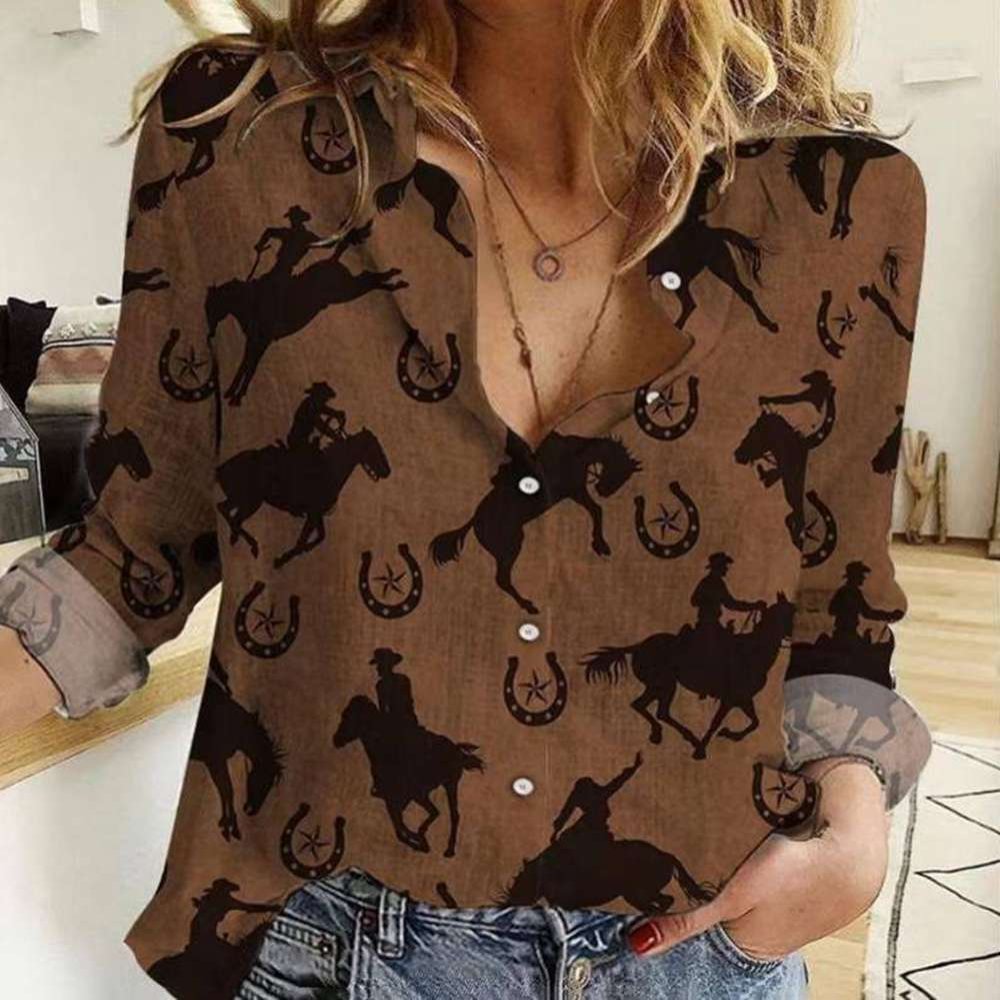
20128 Long-sleeved Shirt catalogue reference. The visible buttons and repeated motif support a front-layout question; the photograph does not approve a supplied print, matching rule or artwork rights.
Turn the front photograph into a specific question
A printed button-front shirt needs a purchasing decision about how the design appears when the garment is fastened. Kujing’s 20128 Long-sleeved Shirt photograph shows dark horse, rider and horseshoe motifs on a brown-toned shirt, with visible front buttons. That provides a concrete starting point for a layout enquiry. Ask the supplier to show the proposed front of the quoted version, rather than treating the catalogue photograph as an agreed production drawing.
Start by confirming whether the enquiry concerns the pictured design or a buyer-proposed alternative. If a different design is requested, ask whether that customization is offered before developing an approval schedule. The useful output is a clear proposal for the selected garment, including the treatment of the front opening. This applies to buyers comparing wholesale long-sleeved shirts without assuming that every catalogue design can be reproduced or altered.
Decide what matters at the placket
A buyer may care about a particular motif near the opening, the general distribution of a repeat, or the appearance of a central design when the front is closed. State that priority explicitly. Do not use the single word matching as a complete instruction. Ask the supplier to explain the proposed relationship between the visible left and right fronts, the placket surface and the buttons. If a requested relationship cannot be offered, resolve that before sampling.
Layout question
Requested reference
Approval decision
Design version
Selected image or buyer artwork revision
Identify the proposal being reviewed
Front opening
Annotated closed-front view
Define which visible relationships matter
Motif placement
Proposed position or distribution rule
Accept, revise or request clarification
Buttons and covered area
Close view of the proposed fastening area
Review the appearance with the front fastened
Size application
Supplier explanation for requested sizes
Choose any additional sample views needed
00015 Round-neck T-shirt is a separate product with a different front presentation. Its graphic is not an artwork option confirmed for 20128.
Review a closed front and a useful close view
Request an overall front view with the sample presented in the agreed closed condition, plus a closer view of the opening. The overall image answers where the design sits on the garment. The close image helps identify the relationship around the visible fastening area. Label both views with the same sample reference so that the team does not combine an overall image from one proposal with a detail from another.
Keep the presentation consistent enough for a useful comparison. Ask the supplier to state whether the shown garment is laid flat or worn, and which quoted size it represents. A worn catalogue photograph can suggest the design’s appearance, but its folds and pose are not a measurement drawing. If the buyer wants a specific alignment, use an annotated proposal or agreed sample instead of estimating it from the model’s posture.
Separate repeat distribution from a fixed placement
For a repeated design like the motif visible on 20128, ask whether the proposed offer uses a general distribution or a controlled position for selected elements. These are questions for the supplier, not production capabilities established by the photograph. A buyer who needs one recognisable element near the front should identify that element and its intended reference position. Otherwise the supplier may be answering a broader question about overall visual style.
When several sizes are requested, ask how the proposed layout applies across those sizes. Decide which additional size views are needed for approval, based on the buyer’s actual concern. Do not assume a single sample defines every size’s pattern relationship. Record the supplier’s response and any agreed limits beside the layout proposal, so that purchasing staff can distinguish the requested design effect from a separately negotiated acceptance requirement.
00018 Sleeveless T-shirt is another separate catalogue reference. The pictured design is not a shared component, licensed artwork claim or approved 20128 production layout.
Keep other garment fronts as separate references
The 00015 Round-neck T-shirt and 00018 Sleeveless T-shirt show different front presentations. They are useful catalogue context for explaining that a central chest graphic and a button-front repeated pattern raise different layout questions. They do not establish shared artwork availability, identical printing methods or a common fabric specification. Keep any alternative garment enquiry on its own product line.
Identify the selected design and the supplier’s offered garment version.
Ask for a closed-front proposal and a labelled detail of the opening.
State whether an overall repeat or a particular motif position matters.
Keep approved views and unresolved layout questions with the quotation.
After approval, preserve the exact view or drawing that the decision covers. If the supplier revises the design, garment or proposed layout, identify the changed area before carrying the approval forward. This produces a practical front-layout answer without making claims about artwork rights, print performance or material properties. Those matters require their own applicable documentation and agreements.
Buyer questions
Does the catalogue photo guarantee a matching front?
It shows a photographed garment. Ask the supplier which front-layout relationship is offered for the quoted version, then approve the relevant proposal or sample view.
Must every motif line up across the opening?
That depends on the buyer’s requirement and the supplier’s confirmed offer. Define the intended relationship explicitly rather than adding it as an unstated expectation after sampling.
Can the T-shirt graphic be ordered on the shirt?
The separate catalogue images do not confirm that option. Submit a specific enquiry and obtain an answer about availability and the proposed layout before proceeding.
Use Kujing’s contact page to send the selected reference and front-layout questions. Further context is available in the blog; the quotation and approved sample should settle this order’s design presentation.
wholesale long-sleeved shirtsbutton-front layoutprinted shirt RFQ